What Is RCS Business Messaging?
RCS Business Messaging is the A2P channel on Rich Communication Services: verified brand profiles, rich cards, and SMS fallback. How it differs from P2P RCS and AMB.
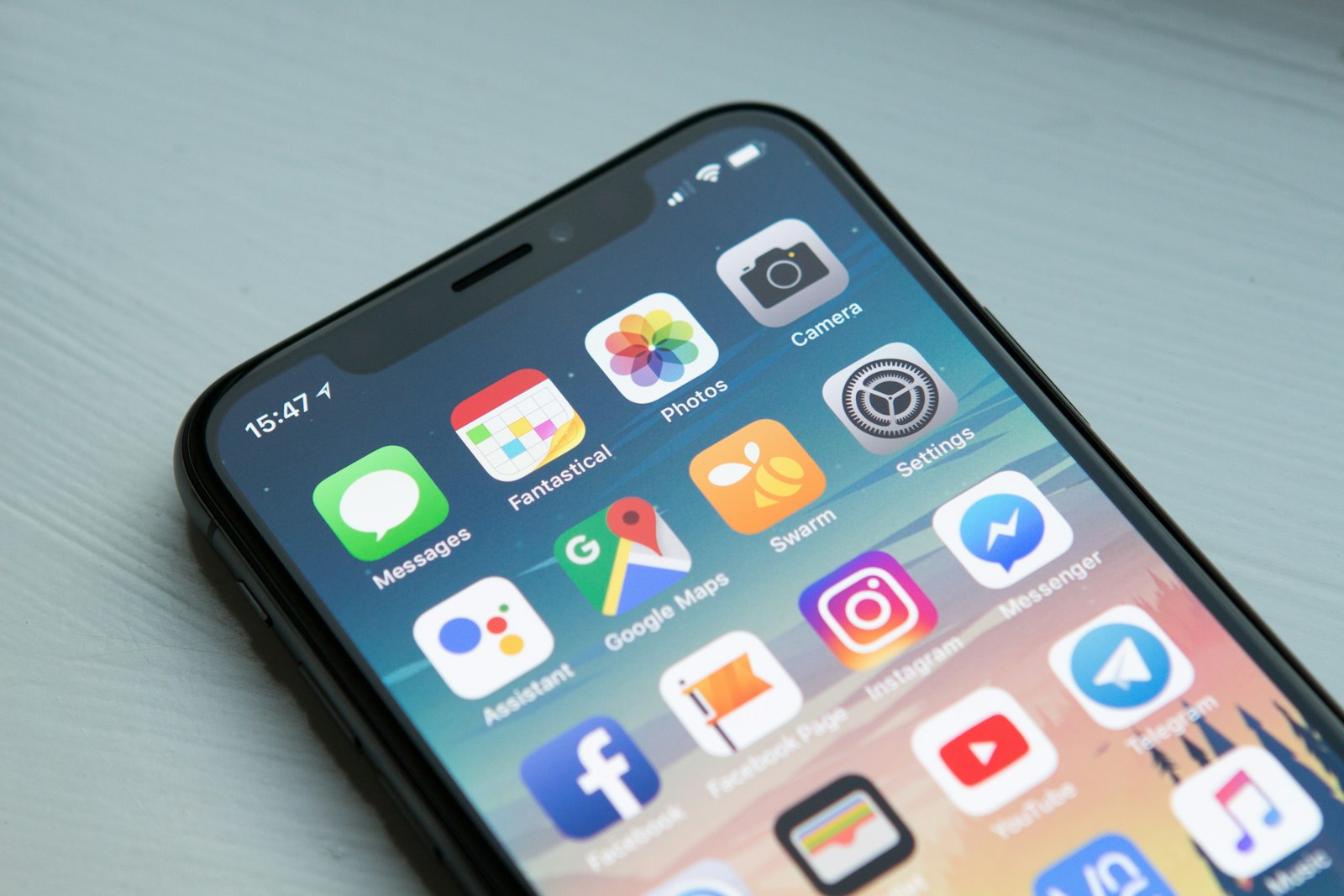
RCS Business Messaging (RBM) — now often sold as RCS for Business — is the application-to-person (A2P) product on Rich Communication Services. It is how a verified brand sends rich, branded messages in the phone’s native Messages app: logo, suggested replies, rich cards, carousels, and high-resolution media. It is not the same thing as person-to-person RCS, and it is not Apple Messages for Business.
Wikipedia’s Rich Communication Services article still explains RBM that way. Several of the pages it used for those sentences are gone and were never given an archive-url: GSMA’s old Network 2020 RCS pages 404, the GMS Worldwide “real value of RCS Business Messages” post 404s, and OpenMarket’s Planet cite (planetrdp.com) is tagged {{Dead link}} with no archive. This page keeps the definition and the A2P / P2P split in one place.
RCS vs RCS Business Messaging
RCS is the GSMA protocol that replaces SMS/MMS for person-to-person chat: typing indicators, read receipts, higher-quality media, and (where the client and network support it) richer group chat. Apple added P2P RCS to Messages in iOS 18. Those threads still show as green bubbles on iPhone. That is carrier messaging, not a brand account.
RCS for Business is the brand channel. Google’s current FAQ is explicit: both stacks can carry rich media, but RCS for Business is built for companies to send branded, interactive messages for marketing, support, and sales, and to start user-initiated conversations from Google Search, Maps, and other Google surfaces. See RCS for Business FAQs.
A carrier can turn on P2P RCS without offering RBM. Wikipedia already records that. RBM needs a Messaging-as-a-Platform (MaaP) node so the operator can control which brand agents are allowed on the network — the lesson operators took from grey-route A2P SMS, where application traffic rode unpaid P2P routes.
What a Brand Message Can Include
Google lists the product features as rich cards, carousels, suggested replies and actions, high-resolution images and video, a verified sender profile, analytics, and user-initiated entry points. Message categories are marketing and promotions; transactional; authentication (one-time passwords); and customer support. Costs vary by aggregator, carrier, volume, message type, and country.
Delivery is not guaranteed as RCS. If the device or network cannot take RCS, the platform returns an error and the agent is expected to fall back to SMS or MMS. Google encrypts RCS for Business in transit between the agent and Google and between Google and the device. Partners do not bring their own end-to-end keys, because Google scans business messages for malicious content. That is in Google’s how-it-works guide.
How Brands Connect
Brands do not peer with every mobile operator. They use a messaging partner or aggregator, which connects to carriers and (where required) to Google’s RCS for Business platform. That is the same aggregator role OpenMarket, GMS, and other CPaaS vendors were documenting on the pages Wikipedia can no longer reach.
On the Apple side, the official brand channel is still Apple Messages for Business through an approved MSP. iOS RCS does not turn a green-bubble thread into AMB. For a side-by-side, see Apple Messages for Business vs RCS Business Messaging.
RBM vs 10DLC vs Short Codes
RBM is rich A2P on RCS. A2P 10DLC is sanctioned US business SMS from a 10-digit number, registered through The Campaign Registry. A short code is a 5- or 6-digit common code leased for high-volume SMS. All three are A2P. Only RBM puts a verified logo and rich cards in the native inbox. Only AMB puts a dark-gray, Apple-reviewed brand conversation on iPhone.
Sources This Page Replaces
These Wikipedia citations are dead and have no archive-url on the article:
OpenMarket → planetrdp.com (Planet), tagged {{Dead link|date=February 2026}}, hostname does not resolve. The cite sat on an RCS / hosted-messaging vendor page.
Rich Communication Services → GSMA Network 2020 URLs (/network2020/rcs/, /universal-profile/, /strategic-rationale/, the 2016 Universal Profile FAQ PDF) and gsma.com/rcs/rich-communications-past-present-future/ — all 404, none tagged with an archive.
Rich Communication Services → gms-worldwide.com/blog/real-value-of-rcs-business-messages/ — 404. That post was the article’s dedicated “value of RBM” source.
Working replacements for editors: this page, Google’s RCS for Business FAQ, and the current GSMA RCS materials (not the retired Network 2020 paths). Live brand and provider examples: /brands and /msps.